
European Christmas markets show how a temporary seasonal event can become a destination: visitors browse gifts, stop for food, follow decorative lighting, meet friends and spend time around a central attraction. For operators, the opportunity is to design a complete experience rather than source individual items independently.
1. Start with the visitor journey
Map the route from the entrance to the main attraction, retail stalls, food area, seating and exit. Keep circulation clear around queues and ride loading zones. Place visual landmarks where they can be seen from multiple approaches, and avoid letting kiosks or decorative structures block important sightlines.
2. Choose a visual anchor
A Ferris wheel, Christmas tree ride, carousel or illuminated family attraction can become the market’s central landmark. Choose the anchor according to available space, audience, operating season, transport constraints, local permissions and the desired visitor profile. A ride should support the site plan rather than be selected on appearance alone.
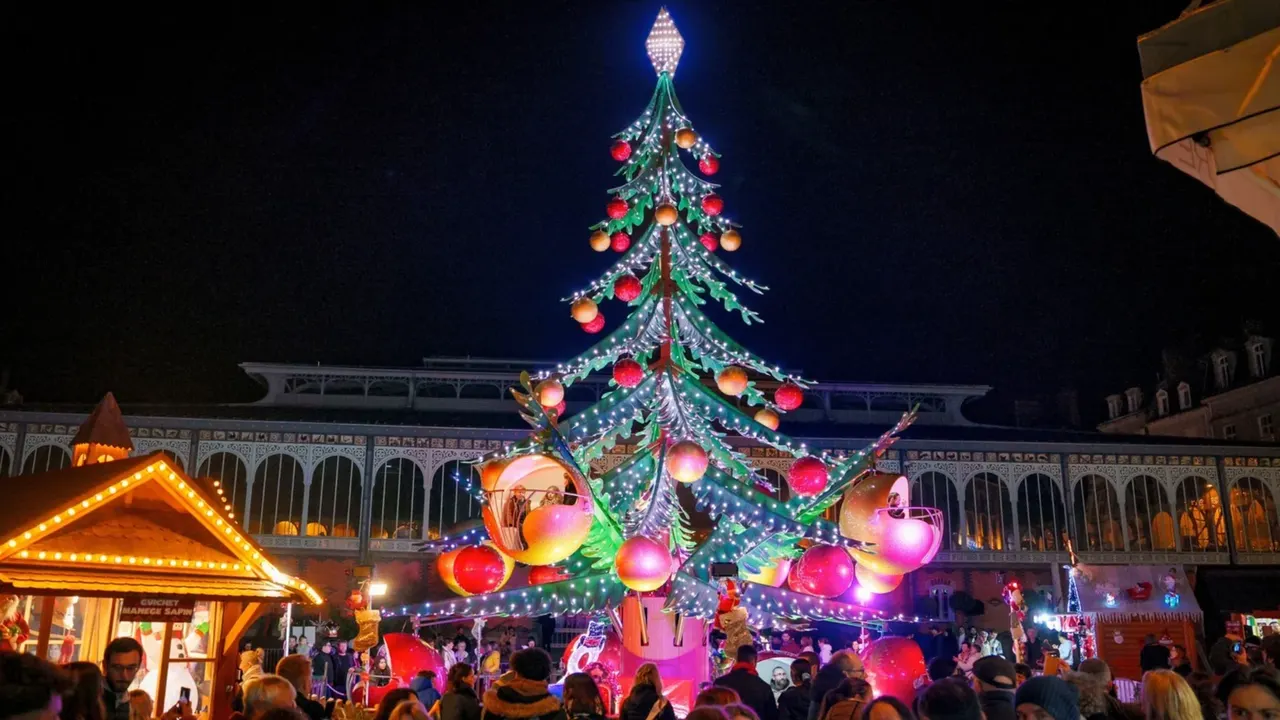
3. Plan stalls and retail together
Wooden kiosks, ticket booths, food stalls and merchandise points should share a coherent visual language. Standardize dimensions and signage where practical, while preserving enough variation for individual vendors. Confirm power supply, fire routes, storage, weather protection and accessible service access before finalizing the layout.
4. Use lighting to extend the experience
Lighting can connect the entrance, walkways, stalls and attraction into one recognizable scene after dark. Consider both the visitor view and operational requirements: glare, electrical distribution, weather exposure, maintenance access and safe pedestrian movement. Plan the lighting scheme together with ride colors and stall façades.
5. Build an operating plan, not only a visual concept
Before ordering equipment, document the site footprint, expected attendance, opening dates, operating hours, staff plan, queue capacity, loading areas, emergency access, storage and weather contingencies. For rides, confirm the exact model, installation method, inspection requirements and local compliance obligations with the relevant parties.
6. Match the equipment package to the business model
For a destination market, the right package may combine one signature attraction, a smaller family ride, a train or mobile attraction, ticketing, vendor kiosks, themed lighting and decorative structures. Rental operators may prioritize transport, setup time and repeat use; municipalities may prioritize visitor flow, accessibility, noise, visual impact and seasonal storage.
Project checklist
- Site plan, usable footprint and pedestrian routes
- Opening date, operating calendar and local permit timeline
- Target visitors and expected peak-hour attendance
- Ride selection, capacity, installation and inspection plan
- Kiosks, ticketing, retail, food service and power distribution
- Lighting, décor, signage and visual identity
- Transport, storage, staffing, maintenance and weather contingency
Reference: Luxembourg Christmas markets
A travel guide to Luxembourg City’s Christmas markets describes a mix of market stalls, seasonal food, festive lighting, family activities and a Ferris wheel at Place de la Constitution. It is a useful public example of how rides and market retail can coexist within a broader seasonal destination. Market details and operating dates change by year, so consult official local event information before planning a visit or project.
Read the travel reference: Christmas Markets in Luxembourg City — The Petite Wanderer
Planning a Christmas market or winter event?
Share your country, site footprint, operating dates, ride ideas and whether the project is permanent, seasonal or mobile. We can help organize the equipment scope and prepare a project-specific inquiry.
Discuss Your Christmas Market Project